

How Much Should Be in Your Emergency Fund?
We recommend three to six months of essential living expenses. This is how much should be in an emergency fund. Those starting out or with significant debt can begin with $1,000-$2,000. Your ideal amount depends on individual circumstances. Consider income stability, household size, and job security.
In this article 11 min read
- What is an Emergency Fund and Why Do You Need One?
- How Much Should Be in Your Emergency Fund? The Core Guideline
- Tailoring Your Emergency Fund: Factors to Consider
- Is $10,000, $20,000, or $50,000 Too Much for an Emergency Fund?
- Where Should You Keep Your Emergency Fund?
- How to Start Building an Emergency Fund
- When is it Appropriate to Use Your Emergency Fund?
- Final Thoughts on Your Emergency Fund
- Frequently asked questions
What is an Emergency Fund and Why Do You Need One?
An emergency fund is a dedicated reserve of money set aside specifically for unexpected expenses or financial emergencies. Think of it as your financial safety net, designed to catch you when life throws an unforeseen curveball. This fund helps you cover costs like medical bills, car repairs, critical home repairs, or even a period of income loss without having to rely on high-interest credit cards or take out loans, which can quickly spiral into more debt.
The purpose of an emergency fund in 2026 has expanded beyond just covering surprises. It’s now also a crucial tool for flexibility during uncertainty. It gives you time to evaluate options without immediate financial pressure. For example, if you lose your job, this fund provides the breathing room to search for new employment. You will not panic about how to pay next month’s rent. Without an emergency fund, unexpected events often lead to increased debt. This undermines your long-term financial goals, regardless of how much should be in an emergency fund.

How Much Should Be in Your Emergency Fund? The Core Guideline
Most financial professionals recommend saving three to six months of essential living expenses in 2026. This range offers a balance between being prepared for common disruptions and not tying up too much capital that could be invested elsewhere. However, for those just starting their savings journey or actively paying down high-interest debt, a starter emergency fund of $1,000-$2,000 is often recommended as a more achievable initial goal when considering how much should be in an emergency fund.
What are essential living expenses?
When calculating your emergency fund, it’s crucial to distinguish between essential and discretionary expenses. Essential living expenses are the non-negotiable costs required to maintain your basic lifestyle. These typically include:
- Housing: Rent or mortgage payments, property taxes, and home insurance.
- Utilities: Electricity, gas, water, and essential internet/phone services.
- Food: Groceries, not restaurant meals or takeout.
- Transportation: Car payments, insurance, fuel, public transport fares, or essential vehicle maintenance.
- Insurance: Health, life, and other critical insurance premiums.
- Minimum Debt Payments: The minimum required payments on credit cards, student loans, or other debts to avoid default, though extra payments that might typically be made should not be included.
You should not include discretionary expenses, such as entertainment, dining out, subscriptions for non-essential services, or luxury purchases, in your emergency fund calculation. You would cut back significantly on these areas during a financial emergency.
Worked Example: Calculating Your Essential Monthly Expenses
Let’s say your household’s essential monthly expenses break down as follows:
- Rent: $1,500
- Utilities (electricity, gas, water, basic internet): $300
- Groceries: $600
- Car payment & insurance: $450
- Health insurance premium: $200
- Minimum credit card payments: $100
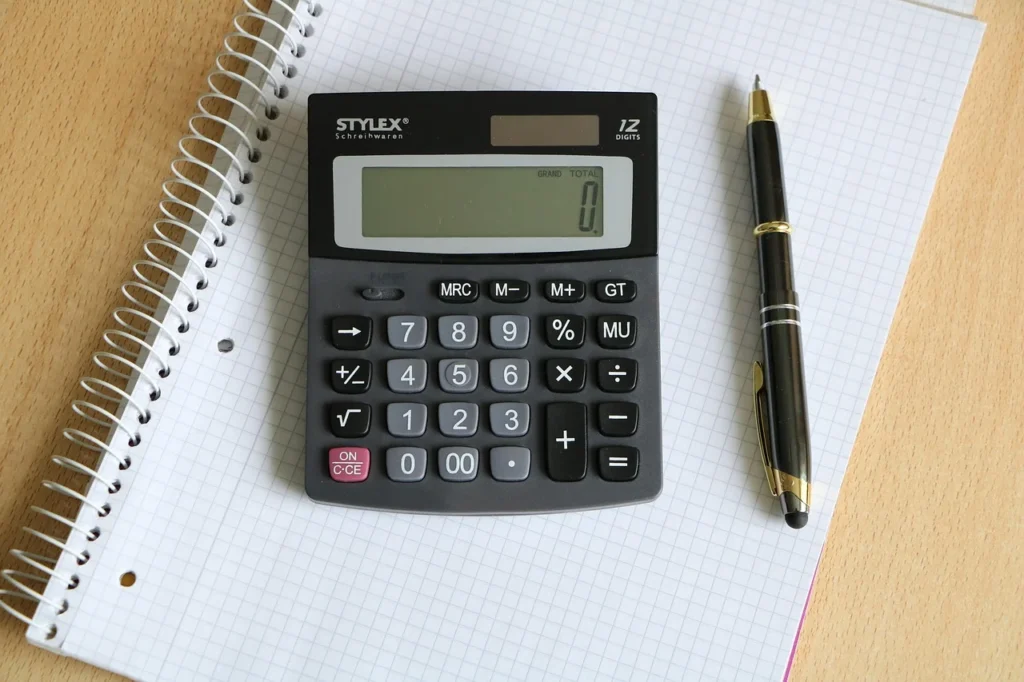
Your total essential monthly expenses would be: $1,500 + $300 + $600 + $450 + $200 + $100 = $3,150.
Based on the 3-6 month guideline:
- For a 3-month fund: $3,150 x 3 = $9,450
- For a 6-month fund: $3,150 x 6 = $18,900
This example shows that a 3-month fund would be $9,450, while a more solid 6-month fund would be $18,900. Your goal would be to build towards the amount that gives you the most peace of mind and security given your personal circumstances, considering how much should be in an emergency fund for you.
Tailoring Your Emergency Fund: Factors to Consider
While 3-6 months is a general guideline, the ideal emergency fund amount is highly personal. A deeper assessment of your unique situation can help you determine if you need more or less than the standard recommendation.

Income Stability and Job Security
If your income is unpredictable or your job security is low, we advise leaning towards the higher end of the emergency fund spectrum, perhaps 6-12 months of expenses. This applies particularly to:
- Self-employed individuals or freelancers: Income can fluctuate significantly, and clients may pay late.
- Those in unpredictable industries: Sectors prone to layoffs or economic downturns warrant a larger buffer.
- Commission-based workers: Earnings can vary month to month, making a larger fund critical.
Conversely, if you have a very stable job in a secure industry and a secondary income source, you might feel comfortable with a fund closer to the three-month mark. However, we still advise caution against underestimating potential needs.
Household Size and Dependents
A larger household or having dependents, especially young children or elderly relatives, generally means higher expenses and more potential for unexpected costs. Single-income households, for instance, bear the entire financial burden on one earner, making a more substantial emergency fund (6-12 months) a prudent choice for how much should be in an emergency fund to protect against job loss or illness affecting that sole income. More people usually means more potential for medical emergencies, school-related costs, or general living expenses.
Health Needs and Insurance Coverage
If you or a family member have chronic health conditions, or if your health insurance plan has a high deductible, we recommend building a larger emergency fund. High deductibles mean you’ll be responsible for a significant portion of medical costs before insurance kicks in. A solid fund can prevent medical emergencies from becoming financial disasters. You should review your insurance policy to understand your out-of-pocket maximums. Consider having at least that amount covered within your fund for health-related emergencies.
Debt Load and Financial Obligations
While some suggest paying off all debt before saving, a common misconception is that you should delay an emergency fund until all debt is gone. This approach is considered risky. Not having an emergency fund often leads to more debt. Unexpected costs are then covered by credit cards. Instead, you should use a balanced approach: build a starter emergency fund ($1,000-$2,000) first. Then focus on high-interest debt. Continue to build the emergency fund concurrently, perhaps by directing a smaller percentage of savings towards it.
What is the 3-6-9 rule of money?
The “3-6-9 rule of money” is not a widely recognized or standardized financial guideline, unlike the 50/30/20 budget rule. It is possible it refers to a personal budgeting or savings strategy adopted by individuals or niche financial communities. When discussing emergency funds, the more common and professionally recommended guideline is the 3-6 months of essential living expenses, with some advocating for 6-12 months depending on personal circumstances.
Is $10,000, $20,000, or $50,000 Too Much for an Emergency Fund?
Whether a specific amount like $10,000, $20,000, or $50,000 is “too much” for an emergency fund depends entirely on your individual circumstances. It specifically depends on your essential monthly expenses. There isn’t a universal cap on how much should be in an emergency fund. The goal is to cover a realistic period of unforeseen financial hardship.

- Is $10,000 a good enough emergency fund? For many individuals or smaller households with lower essential living expenses (e.g., $2,500-$3,300 per month), $10,000 could cover 3-4 months of expenses, making it a very good starting point or even a sufficient fund. For others with higher expenses, it might only cover a month or two.
- Is $20,000 too much for an emergency fund? For a household with essential expenses around $3,500-$5,000 per month, $20,000 would cover 4-5 months, which aligns perfectly with standard recommendations. For a single person with low expenses, it might represent 6-9 months, which is on the higher end but justifiable for high job insecurity or significant health concerns.
- Is $50,000 too much for an emergency fund? For households with very high essential expenses (e.g., $8,000-$10,000+ per month), or those with extremely unstable income, significant health needs, or multiple dependents, $50,000 might represent 5-6 months of coverage, making it entirely appropriate. For someone with $2,000 in monthly expenses, $50,000 would be over 2 years of coverage. You would consider this excessive to keep in a low-yield savings account. That money could be working harder in investments after you establish a sufficient emergency fund.
Beyond adequate emergency fund coverage
The key is to calculate your specific needs rather than aiming for an arbitrary round number. The goal is adequate coverage, not just a large sum. Once you have a sufficient emergency fund based on your essential expenses, we recommend exploring other financial goals, such as investing for retirement or paying down high-interest debt, after considering how much should be in an emergency fund.
Where Should You Keep Your Emergency Fund?
The location of your emergency fund is almost as important as its size. It needs to be readily available, easily accessible, and separate from your regular spending money. We advise against keeping it in an account linked to your daily debit card, to avoid accidental spending.
Sources like Fidelity.com and NerdWallet.com often recommend high-yield savings accounts for emergency funds. Here’s why:
- Accessibility: You can typically access funds within 1-2 business days, which is fast enough for most emergencies.
- Safety: These accounts are usually FDIC (US) or FSCS (UK) insured, protecting your money up to specific limits.
- Interest Earnings: While not a get-rich-quick scheme, the higher interest rates compared to traditional savings accounts can help your money grow slightly and combat inflation.
- Separation: Keeping it in a separate account, often at a different bank than your primary checking account, creates a psychological barrier to impulsive spending.
We advise against using a 401(k) or other retirement investments as an emergency fund. Doing so typically incurs penalties and taxes. It also sets back your long-term retirement goals. Similarly, we discourage relying on credit cards for emergencies. This leads to high-interest debt, defeating the purpose of being financially prepared.

How to Start Building an Emergency Fund
Building an emergency fund can seem daunting, but breaking it down into manageable steps makes it achievable. Here’s a practical approach:

- Calculate Your Monthly Essential Expenses: As detailed earlier, identify non-negotiable costs for housing, food, utilities, transportation, and minimum debt payments. This is the target foundation.
- Set a Realistic Goal: Start with the $1,000-$2,000 starter fund. This initial sum can cover many common, smaller emergencies and provides a significant psychological boost. Once achieved, aim for 3 months, then 6 months, and adjust upwards if your situation requires it.
- Create a Dedicated Savings Account: Open a separate, high-yield savings account specifically for your emergency fund. This separation makes it less tempting to dip into the funds for non-emergencies.
- Automate Your Savings: Set up an automatic transfer from your checking account to your emergency fund every payday. Even small, consistent contributions add up over time. Treat this transfer like any other bill you have to pay.
- Cut Discretionary Spending (Temporarily): To accelerate your fund building, identify areas where you can temporarily reduce non-essential spending. This might include fewer restaurant meals, cutting subscriptions you don’t use often, or delaying non-critical purchases.
- Boost Savings with Windfalls: Direct any unexpected money, such as tax refunds, bonuses, or gifts, directly into your emergency fund. These windfalls can significantly speed up your progress.
- Monitor and Adjust: Regularly review your essential expenses and the size of your fund. Life changes, and your emergency fund should adapt accordingly. If your expenses increase, or your job security decreases, we recommend increasing your savings goal.
Remember, consistency is key. Even saving $10, $25, or $50 a week, as mentioned by FamilyCU.com, can make a substantial difference over time. The goal is progress, not perfection.
When is it Appropriate to Use Your Emergency Fund?
Knowing when to tap into an emergency fund is as important as building it. The fund, and how much should be in an emergency fund, is for true emergencies. It is not for predictable or non-urgent expenses. We define a true emergency as an unexpected, necessary expense that you cannot cover with regular income. Otherwise, you would need to finance it with high-interest debt.

Examples of appropriate uses include:
- Job Loss or Significant Income Reduction: To cover essential living expenses while you seek new employment.
- Unexpected Medical Bills: For hospital visits, emergency procedures, or prescription costs not covered by insurance.
- Essential Car Repairs: If your vehicle is critical for work or daily life and breaks down unexpectedly.
- Critical Home Repairs: Such as a leaky roof, a broken furnace in winter, or burst pipes, which impact safety or habitability.
- Emergency Family Travel: For unforeseen events requiring immediate travel, like a serious illness or death in the family.
Conversely, your emergency fund is not meant for:
- Holiday gifts or vacations.
- Cosmetic home improvements or planned renovations.
- Concert tickets or entertainment.
- Paying off regular bills that you should be able to cover with your income.
- Replacing a working but older appliance with a new model.
Using your fund for non-emergencies depletes your safety net and leaves you vulnerable when a real crisis strikes. If you use funds for a true emergency, your next priority should be to replenish it as quickly as possible.
Final Thoughts on Your Emergency Fund
Building and maintaining an emergency fund is a cornerstone of sound financial planning. It provides peace of mind, protects you from debt, and offers flexibility during life’s inevitable uncertainties. By understanding your essential expenses, setting realistic goals, and diligently saving, you can create a solid financial safety net tailored to your specific needs. Remember, the journey to financial security is ongoing. Your emergency fund is a dynamic tool that you should review and adjust as your life circumstances evolve.
Frequently asked questions
How much emergency fund should a single person have?
A single person should aim for an emergency fund covering three to six months of their essential living expenses. For guidance on how much should be in an emergency fund, if their job security is low or income is unstable, we recommend saving closer to six to twelve months of expenses.
How much should be in an emergency fund for a college student?
For a college student, a starter emergency fund of $500-$1,000 is a good initial goal to cover unexpected costs like textbook emergencies, minor car repairs, or unforeseen travel. Once they establish that, they can work towards 1-3 months of essential expenses. This might be lower if they live at home or have minimal fixed costs.